20 Oct 2026
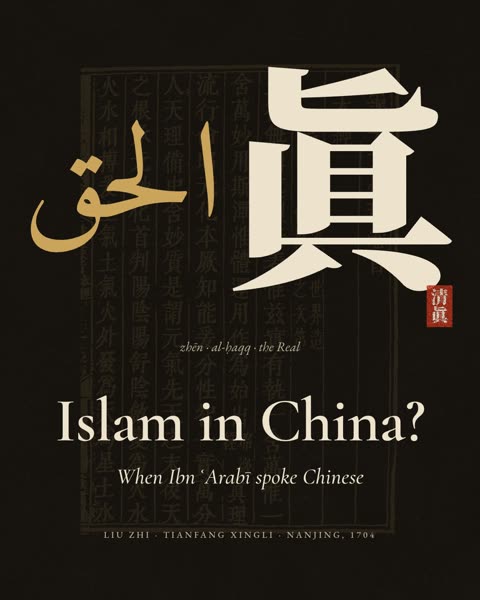
Islam in China? When Ibn ʿArabī spoke Chinese
How Chinese Muslim scholars of the seventeenth and eighteenth centuries wrote Islam in the language of Confucian learning, with Ibn ʿArabī’s school behind them.
Sources & resources
Talks and interviews
- Sachiko Murata: International Kenan Rifai Symposium, Session 9 - Sachiko Murata, Prof. &William Chittick, Prof. ↗
Cemalnur Sargut · talk page
Books
- Sachiko Murata, Chinese Gleams of Sufi Light (SUNY Press, 2000), foreword by Tu Weiming, with Chittick’s translation of Jāmī’s Lawāʾiḥ. The place to start. ↗
- Sachiko Murata, William C. Chittick and Tu Weiming, The Sage Learning of Liu Zhi: Islamic Thought in Confucian Terms (Harvard University Asia Center, 2009). Chapter 1 is the best introduction. ↗
- Zvi Ben-Dor Benite, The Dao of Muhammad: A Cultural History of Muslims in Late Imperial China (Harvard University Asia Center, 2005). ↗
- Jonathan N. Lipman, Familiar Strangers: A History of Muslims in Northwest China (University of Washington Press, 1997). ↗
- Najm al-Dīn Rāzī, The Path of God’s Bondsmen from Origin to Return, trans. Hamid Algar (Caravan Books, 1982). ↗
Free online texts
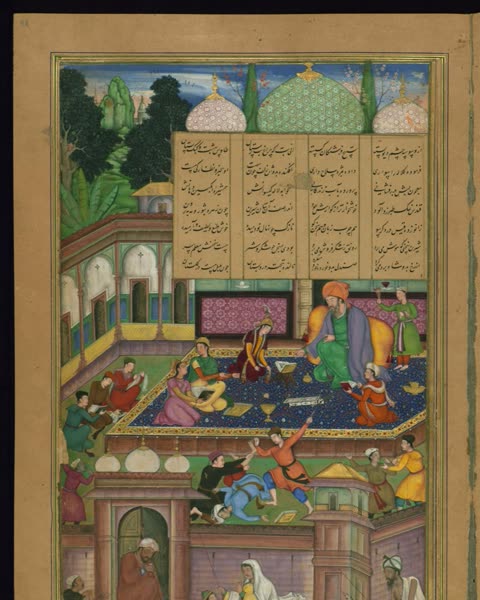
- Jāmī, Lawāʾiḥ (Flashes of Light), with the Persian manuscript in facsimile and Whinfield’s 1906 English ↗
- Liu Zhi, Tianfang xingli, with characters explained ↗
- Wang Daiyu, Qingzhen daxue (The Great Learning of the Pure and Real) ↗
Thinkers in this post
William C. Chittick Sachiko Murata Tu Weiming Liu Zhi Wang Daiyu Jāmī Ibn ʿArabī Zvi Ben-Dor Benite